-LOGO-120x120.png)
Global Impacts of China’s Leading Medical Technologies on the Worldwide Healthcare Industry
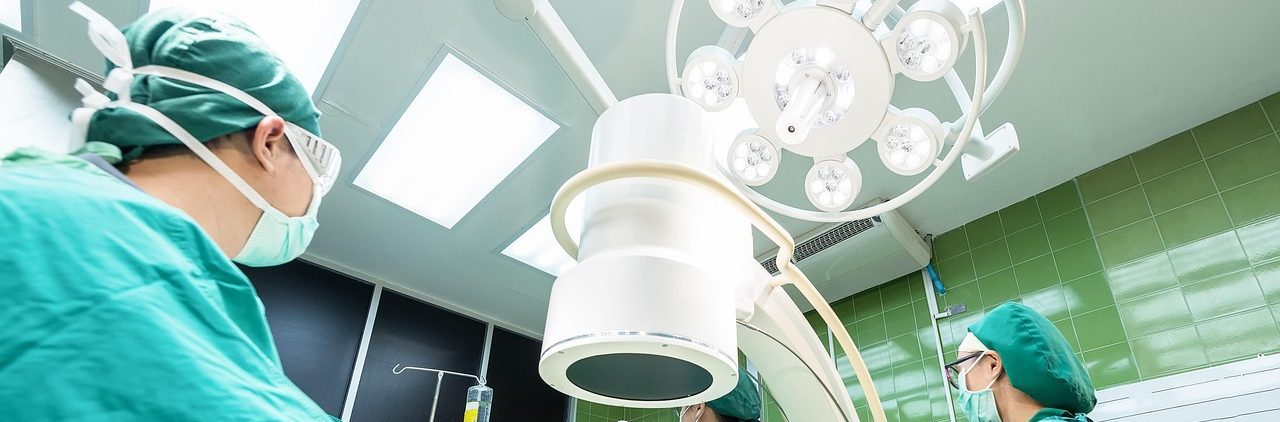
Over the past decade, China has quietly revolutionized global vascular surgery — especially for life-threatening complex aortic diseases. Thanks to groundbreaking work by top medical teams led by Professor Fu Weiguo from Fudan University Zhongshan Hospital and Professor Shu Chang from Second Xiangya Hospital, Chinese medical technologies are no longer just “world-class.” They are resetting global medical standards, changing how doctors worldwide treat high-risk aortic conditions, and making advanced life-saving care accessible to more patients across the globe.
1. Ended the Western monopoly on complex aortic surgery standards
For many years, all global rules for aortic treatment were set by Western medical systems. The aortic arch — the most critical and fragile section connecting the heart to brain arteries — was considered too risky for minimally invasive surgery. Doctors believed only open-chest operations could fix severe aortic dissection and arch lesions, even though those surgeries came with terrifying risks: a 15%–45% death rate and a 25% chance of paralysis.
Chinese medical teams completely changed this reality. By inventing original in-situ fenestration surgical techniques and independently developing Fu-series and Ankura-series aortic stents, they pushed surgical safety to an unprecedented level. Today, China’s minimally invasive methods drop the mortality rate tojust 1.3% and the paralysis rate to 0.8%.
These results are not local claims — they are fully verified and published in top international medical journals. For the first time in history, the global medical community has a complete, safer, and replicable treatment system created outside the West, breaking the decades-long monopoly in complex vascular intervention.
2. Made high-risk aortic treatment accessible to the whole world
Traditional open aortic surgery is extremely demanding. It requires huge surgical incisions, complex extracorporeal circulation equipment, long hospital stays, and highly experienced teams. For decades, only a few elite Western medical centers could handle these operations, leaving most patients worldwide — especially elderly, high-risk, and critically ill people — with limited treatment options.
China’s minimally invasive aortic technologies solve this global pain point perfectly. They feature tiny wounds, far fewer complications, faster recovery, and stronger adaptability to various human anatomical differences. More importantly, China has turned cutting-edge surgical skills into standardized, scalable solutions.
With official U.S. FDA and EU CE certification, Chinese self-developed stent devices and surgical protocols are now used in more than 35 countries, with over 60,000 successful global implantations. This means ordinary hospitals in both developed and developing regions can now perform top-tier complex aortic surgery, drastically narrowing the global medical gap and saving countless lives that were previously hard to rescue.
3. Trained a new generation of global vascular surgeons
Unlike Western medical systems that tend to export theories only, China shares its practical, life-saving surgical skills openly with the world.
Professor Shu Chang’s team alone has delivered 245 live surgical demonstrations across 31 countries, completed 24 first-ever local complex aortic surgeries in 16 countries, and provided professional systematic training for over 1,200 vascular surgeons from 32 countries.
Hundreds of international doctors have learned China’s minimally invasive techniques and brought these advanced skills back to their home countries. Meanwhile, Chinese medical teams regularly share their latest clinical discoveries at the world’s most influential vascular conferences, including New York’s VEITH Symposium and Germany’s LINC Conference. This open sharing model is steadily lifting the overall standard of global vascular medicine.
4. Created a new practical model for global medical innovation
Western medical research often focuses on theoretical experiments and small-scale trials. China’s medical innovation follows a completely different and more practical logic: starting from real patient needs.
Thanks to its massive clinical case resources, China iterates surgical techniques and medical devices based on real-world complex diseases, focusing on lowering risks, reducing trauma, and improving patient survival quality. This “clinical-practice-first” innovation model has set a new example for global medical research, guiding the worldwide healthcare industry to prioritize practical, patient-centered treatment upgrades over pure theoretical exploration.
5. Upgraded global postoperative rehabilitation standards
Surgery success does not equal full recovery. Western rehabilitation systems mainly rely on single physical and drug-based relief methods, which can hardly solve long-term postoperative inflammation, fatigue, and physical weakness.
China’s unique combination of Western precise surgery and evidence-based Traditional Chinese Medicine rehabilitation offers a better solution. This integrated model effectively relieves postoperative discomfort, speeds up recovery, and improves patients’ long-term quality of life. It fills the global gap in complex surgical rehabilitation and provides a new, efficient recovery plan for patients worldwide.
Final Conclusion
China’s leading aortic minimally invasive technologies have brought historic changes to the global healthcare industry. It has broken the long-term single Western dominance of global medical standards, technology promotion, and medical innovation. By providing safer, simpler, more affordable, and more accessible life-saving solutions, China is helping more global high-risk patients get effective treatment, and continuously promoting inclusive progress for the entire world’s medical system.
References (Publicly Accessible International Sources)
1. JACC: Case Reports. (2025). Minimally Invasive Repair for Complex Aortic Arch Dissection Using Integrated Branch Stent System. PMC Open Access.
2. European Heart Journal – Case Reports. (2024). Novel Double-Branched Endovascular Technique for Aortic Arch Ulcer Repair.
3. Frontiers in Cardiovascular Medicine. (2023). Optimized Stent System for Improved Aortic Remodeling in Complex Dissection.
4. Vascular and Endovascular Surgery. (2025). Custom Fenestrated Stent for Rare Aortic Anatomical Variations.
5. FDA & CE Official Certification Documents: Ankura & Fu-series Aortic Stent Graft Systems.
6. VEITH Symposium Official Release (2024–2025): Chinese Innovative Aortic Endovascular Techniques Global Promotion Report.